Plenary & Keynote Speakers
Plenary Lectures
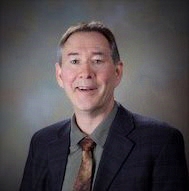 |
Mathew Celina – Independent consultant, Albuquerque, New Mexico, United States
"Polymer degradation science versus materials testing - valuable synergism?"
Doctor Mathew Celina has a PhD in physical polymer science and focuses on polymer materials science and chemistry related to the performance assessment, design optimization, qualification, characterization, cure/degradation kinetics, and lifetime prediction of polymeric materials. He is also active in polymer materials/system failure, data interpretation, root cause assessments, and the application of IR spectroscopy to polymers. Goal: We use the best materials for the most challenging applications. Previously distinguished member of technical staff at Sandia National Laboratories, lecturer at Queensland University of Technology, held positions in small and large industry, and currently working as an independent expert witness and consultant. Dr. Celina served as editor and then editor-in-chief for many years for the 'Polymer Degradation and Stability' journal and is well-known in this field.
|
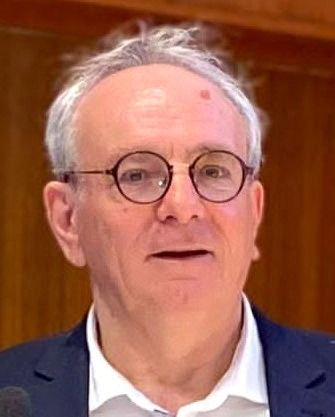 |
Jean-François Gérard – Professeur émérite à l'INSA de Lyon, France
"Modification and degradation issues that are more relevant than ever for circularity of polymers"
Professor Jean-François GERARD is currently Emeritus Professor at INSA Lyon/Université de Lyon and develops research activities within the UMR CNRS 5223 ‘Ingénierie des Matériaux Polymères’. He began as CNRS Research Scientist at the UMR 5627 ‘Relations Structure-Propriétés des Polymères’ lab. He headed the UMR CNRS 5223 laboratory from 2002 to 2011. Since the beginning of his career, he dedicates his researches to the design of various polymer-based materials. His interests are focused on nanostructured polymers and nanostructuration processes - (nano)microphase separation phenomena from RIPS, hybrid organic-inorganic nanomaterials from introduction of metal oxo-clusters or considering sol-gel chemistries, ionic liquids, nanoparticles and nanocomposites -, interfaces and interphases in blends and composite materials (from nanocomposites to fiber-based composites), surfaces, coatings and adhesives, etc. Numerous of his researches are done within collaborative projects with Industry. He is the author of about 340 papers in scientific journals, 21 patents, about 175 invited international conferences, and he supervised 92 PhDs.
|
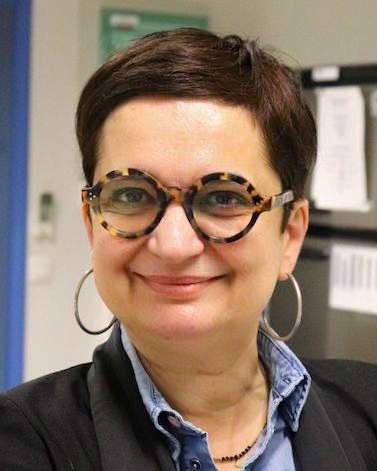 |
Muriel Mercier-Bonin – Toxalim INRAE Toulouse, France
"Microplastics and nanoplastics: what impact do they have on health? Some results from the INRAE/CNRS scientific collective assessment"
Doctor Muriel Mercier-Bonin has been an INRAE Research Director at the Toxalim Unit in Toulouse since 2019 and Deputy Director since 2024. She began her career at the Toulouse Biotechnology Institute (INSA Toulouse), studying interactions between microorganisms and surfaces, then joined the MICALIS Unit in Jouy-en-Josas to investigate the structural and functional roles of mucus in intestinal homeostasis. She has led a research group within the Neuro-Gastroenterology and Nutrition team, examining interactions between mucus, food contaminants, microbiota, and the host. Since 2018, her research has focused on the intestinal health impacts of micro- and nanoplastics. From 2022 to 2025, she co-led a national scientific assessment on plastics in agriculture and food and contributes to international efforts to end plastic pollution.
|
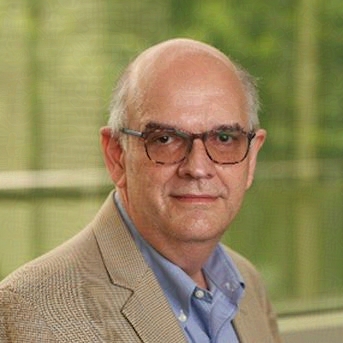 |
Alessandro Müller – University of the Basque Country San Sebastian, Spain
"Structure, crystallization modes and properties of biodegradable random copolyesters"
Professor Alejandro J. Müller is an IKERBASQUE Research Professor at POLYMAT and the Department of Polymers and Advanced Materials: Physics, Chemistry, and Technology within the Faculty of Chemistry at the University of the Basque Country UPV/EHU in Donostia-San Sebastián, Spain. He leads the Polymer Physics and Advanced Manufacturing research area at POLYMAT (https://www.polymat.eu/en/research/Polymer-Physics-Advanced-Manufacturing) and is the head of the Polymer Physics of Advanced Multiphasic Materials group.
His research interests include the structure, morphology, nucleation, crystallization, and crystallization kinetics of semicrystalline polymers and multiphasic materials, particularly polymer blends, block and random copolymers, biopolymers, and nanocomposites. Prof. Müller has received several awards, including the Lorenzo Mendoza Fleury Science Prize (Polar Prize) in Venezuela and the international Paul J. Flory Polymer Research Prize. He is a Corresponding Member of the National Academy of Engineering and Habitat of Venezuela (ANIH) and of the Latin American Academy of Sciences (ACAL). In July 2023, the municipality of Beijing, China, awarded him the "Zhongguancun Award for International Cooperation 2022" for his scientific collaboration with the Institute of Chemistry, Chinese Academy of Sciences (ICCAS). He has supervised 38 doctoral, 62 master's, and 96 undergraduate theses. Prof. Müller has delivered more than 120 plenary, keynote, and invited lectures across approximately 30 countries. He has co-authored more than 600 publications. He is an editor of the journal POLYMER (Elsevier), in the areas of Polymer Physics and Physical Chemistry.
|
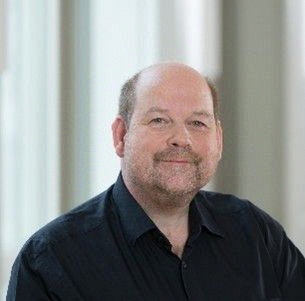 |
Bernhard Schartel – Bundesanstalt für Materialforschung und -prüfung (BAM), Germany
"Sustainable Flame Retardancy between Fake, Fiction, and Future: Wastewater phosphorus-enriched Algae and Poly(limonene carbonate)"
Professor Bernhard Schartel is a Polymer scientist, diploma (German Plastics Institute, DKI), PhD (Philipps University Marburg), Post-doc (Heriot Watt Edinburgh), working mainly on polymer blends, and molecular reinforcement. Since 1996 at BAM, durability of polymers, weathering, thermal analysis, nanocomposites, elastomers, since 2000 mainly fire retardancy, head of the division “Technical Properties of Polymeric Materials”. Guest researcher (NIST 2008, Newcastle University 2011), 2009 Habilitation (Philipps University Marburg), since 2020 Professor (Freie Universität Berlin).
|
Keynote Talks
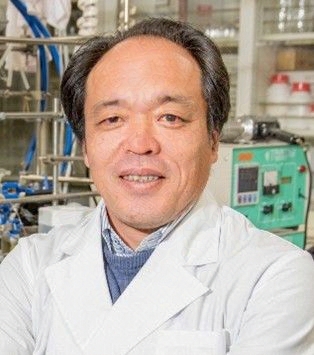 |
Hideki Abe – Team Director, Bioplastic Research Team, RIKEN Centre for Sustainable Resource Science (CSRS), Japan
"Syntheses and design of marine-biodegradable ester-based polymeric materials"
Professor Hideki Abe received his B.S. (1991) and M.S. (1993) from Tokyo Institute of Technology. Since 1993, he has been working at RIKEN and obtained PhD in 1996. He successively held various positions in RIKEN, and he was appointed as a Team Director at RIKEN CSRS, in 2010. He is an Editor for Biodegradation and Bio-based Polymers fields in Polymer Degradation and Stability, Elsevier, UK, from 2020. His current research interests include the developments of biodegradable polymer materials for a variety of applications and the creations of novel bio-based polymer materials. He published over 200 original research papers.
|
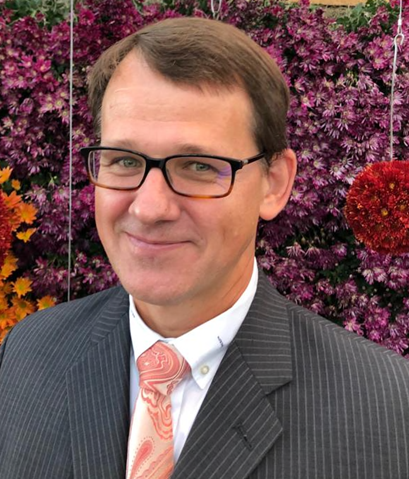 |
Rafael Auras – Amcor Endowed Chair in Packaging Sustainability, School of Packaging, 448 Wilson Road Rm. 157, Michigan State University,, East Lansing, MI, 48824-1223 -USA
"Enhancing the Biodegradation of Isotropic Bio-polyesters via Hydrolytic Pretreatment and Bioaugmented Composting"
Professor Rafael Auras hold the Amcor Endowed Chair in Packaging Sustainability in the School of Packaging at Michigan State University. His research focuses on advancing packaging materials and sustainability through work in polymer mass transfer, biodegradation, life-cycle assessment, and circular packaging systems. He leads a multidisciplinary research group that includes undergraduate, graduate, and postdoctoral researchers and collaborates extensively with industry and government partners. Dr. Auras is a frequent speaker at national and international conferences and has published widely in leading journals and books..
|
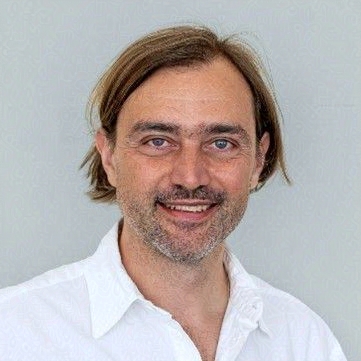 |
Hynek Benes – Institute of Macromolecular Chemistry, Czech Academy of Sciences, Czech Republic
"Enzymatic synthesis and degradation of bio-based polyurethane foams"
Professor Hynek Beneš obtained his PhD degree in Macromolecular chemistry at the University of Chemical Technology in Prague in 2007. In 2007-2008 he was a postdoctoral fellow in prof. Jean-Francois Gerard group at INSA Lyon, France. Currently, Hynek works as a senior researcher and deputy head of the Department of Polymer Processing at the Institute of Macromolecular Chemistry, Czech Academy of Sciences, Prague. Hynek's research interests have always been linked to "sustainability". His current research involves bio-based thermosets, microwave polymerizations, (bio)degradable polyurethanes and chemical recycling.
|
 |
Camilo Cruz – ENSAM / IMT Mines d'Albi, France
"Aging-induced embrittlement of short fiber-reinforced thermoplastics – Towards a mechanistic-based simulation of component aging tests "
Professor Camillo Cruz is a Chemical engineer (National University of Colombia, 2005) with a PhD in numerical rheology (Arts et Métiers, 2010). Industrial experience (2011-2025) as research project manager in the field of plastics engineering at the Corporate Research of the Bosch group (Renningen, Germany). Currently holding a Junior Professorship Chair at the IMT Mines Albi focused on smart modelling approaches for the lifetime estimation of polymer-based composites.
|
 |
Jean-Michel Douarre – Manufacture Michelin, France
"Sustainable materials for tyres: open innovation a key factor of success"
Doctor Jean-Michel Douarre has been working for Michelin for 36 years in the domain of materials for tyres as a manager, project leader or expert in development, predevelopment and advanced research in France and in the US. With an initial background of Chemical Engineer with a PhD in polymer photoageing, he is now in charge of the program of research on sustainable materials for Michelin.
|
 |
Bruno Fayolle – ENSAM / IMT Mines d'Albi, France
"Aging-induced embrittlement of short fiber-reinforced thermoplastics – Towards a mechanistic-based simulation of component aging tests "
Professor Bruno Fayolle has been a Full Professor at Arts et Métiers in the PIMM laboratory since 2014. The research area of Bruno Fayolle focuses on the long-term performance of polymers especially by modelling the consequences of aging materials on their mechanical properties. Through multi-scaling approaches, his research contributes to predict the evolution of functional properties of polymer parts. As Deputy Director of the Institut Carnot ARTS, he promotes researches conducted by public laboratories in partnership with industry.
|
 |
Dieter Fischer – Leibniz Institute of Polymer Research Dresden, Germany
"Identification and quantification of Microplastics in environmental and food samples by Raman particle-based and Py-GC/MS mass-based methods. "
PhD in Analytical Chemisty, Polymer Chemist at the Leibniz Institute of Polymer Research Dresden since 1990. Dr. Dieter Fischer is head of the Research Group “Spectroscopy and Microplastics” at the Leibniz Institute of Polymer Research Dresden. His main research areas are : Analytical chemistry, spectroscopy (FTIR, NIR, UV/VIS, Raman) and multivariate data analysis, Polymer analysis and characterization, Process Analytical Technology (PAT) by spectroscopic methods, FTIR- and Raman microscopy and imaging, Fluorescence microscopy, Identification and quantification of microplastic particles in environmental samples (sediment, rivers, oceans, air), in biota (tissues, animals and human cells, blood) and in food and packaging by a combination of optical particle analysis with FTIR, Raman and Fluorescence microscopy and with Pyrolysis-Gas chromatography/Mass spectrometry (In the field of microplastics analysis 15 national and international projects).
|
 |
Alberto Frache – Politecnico di Torino, Italy
"Engineering the future of plastics: unlocking the potential of mechanical recycling"
Professor Alberto Frache holds a Full Professorship in Materials Science and Technology at the Department of Applied Science and Technology of Politecnico di Torino.. A.Frache is co-author of 160 peer-reviewed papers in Scientific Journals (7000 citations, h-index: 48). The main research topics are: studies on degradation, biodegradation and recycling of polymers and biopolymers; studies on different stabilizing additives and Flame Retardant systems; studies on processing/microstructure/properties relationships; studies on polymer materials for 3D printing with FDM technology; studies on polymeric nanocomposites. His teaching activity is dedicated to lectures for Master degree in Materials Engineering on Polymeric Materials Technologies and Polymer degradation and recycling.
|
 |
José Gámez-Pérez – Universitat Jaume I de Castelló, Spain
"Engineering Biodegradation: Testing Protocols and Rate Modulation"
Professor José Gámez-Pérez holds degrees in Chemistry and Chemical Engineering from the University of Valencia and ECPM Strasbourg, and a PhD (2006, ETSEIB-UPC) focused on structure–property relationships in processed polypropylene copolymers. He joined Universitat Jaume I (UJI) in Castellón in 2010, co-founding the Polymers and Advanced Materials group (now BioPIMA), and became Associate Professor (Profesor Titular) in 2012. He previously coordinated dual-degree and high-performance academic programs at ESTCE (2011-2015).
His research addresses structure–process–property relationships in thermoplastics, post-yield mechanics, nanocomposites, and biopolyester processing for packaging. He has authored 51 indexed publications, over 90 conference contributions, and co-supervised six PhD theses.
More recently, his work has shifted toward polymer biodegradation and sustainability. He leads EU-funded projects such as COMBOOST on accelerated composting of bioplastics, advances bio-based packaging materials, and co-founded the UJI spin-off CEBIMAT Lab S.L., specializing in advanced biodegradation testing aligned with circular economy goals.
|
 |
Mikael Hedenqvist – KTH Royal Institute of Technology, Sweden
"Protein plastics – stability and degradation"
Professor Mikael Hedenqvist is head of the Polymeric Materials division at KTH. He is Editor in Chief for Polymer Testing. Main research areas are physical and ageing properties of synthetic and renewable polymers, modelling, mass transport and processing of polymers. He has coauthored more than 365 publications and two textbooks; Fundamental Polymer Science and Applied Polymer Science.
|
 |
Marianela Hernandez Santana – Consejo Superior de Investigaciones Científicas (CSIC), Spain
"Designing Materials That Repair Themselves: The Critical Role of Polymer–Filler Interfaces"
Professor Marianela Hernandez Santana is a tenured scientist at the Institute of Polymer Science and Technology (ICTP) of the Spanish National Research Council (CSIC). Author of more than 100 peer-reviewed articles in leading international journals (h-index = 33) and leader of more than 20 national and international R&D projects and contracts. Currently, she is Director of the International Rubber Technology Network (RITC) from the Latin-American Society of Rubber Technology (SLTC), and Secretary of the Governing Board of the Spanish Association of Composite Materials (AEMAC). Her scientific activity is focused on the implementation of circular economy principles, favoring the use of recycled and self-healing materials.
|
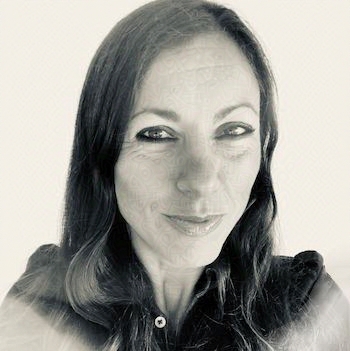 |
Giada Lo Re – Department of Industrial and Materials Science, Chalmers University of Technology, Sweden
"Circular design Poly(ethylene brassylate) via reactive extrusion"
Giada Lo Re is an Associate Professor in the Department of Industrial and Materials Science at Chalmers University of Technology, Sweden, and in the Department of Civil and Industrial Engineering at the University of Pisa, Italy. Her research focuses on elucidating the processing–structure–properties relationships of sustainable polymers and nanocomposites at both the molecular and nanoscale levels. By employing reactive extrusion, advanced process engineering, and valorisation of biomass, agricultural waste, and industrial by‑products, her work supports scalability and industrial implementation of sustainable materials.
She received the Graduate Award for the Best Thesis in Chemical Engineering and Materials Science (AIMAT, Italy, 2012) and the Green Materials Prize (Institution of Civil Engineers, London, 2016). She serves as an expert reviewer for the Natural Sciences and Engineering Research Council of Canada (NSERC), the French National Research Agency (ANR), and the European Commission, and is a member of the Editorial Board of Composites Part C (Elsevier).
|
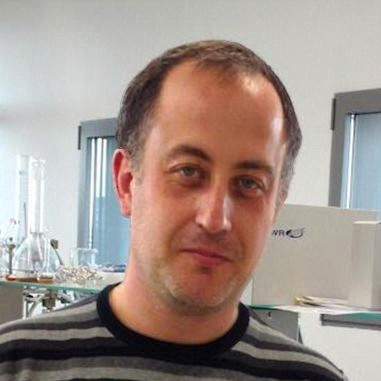 |
Jean-Marie Raquez – Laboratory of Polymeric and Composite Materials at University of Mons, Belgium
"A paradigm approch to design non-isocyanate polyurethane thermosets with circular features for applications in structural composites."
Professor Jean-Marie RAQUEZ is head of the Laboratory of Polymeric and Composite Materials at University of Mons (Belgium) and Associated Professor in the Department of Chemical Engineering at Polytechnique Montreal (Canada). His research activities focus on “bioplastics”, ranging from controlled and catalyzed polymerization reactions, production of high performances nanocomposites/nanohybrids via reactive processing, e.g. reactive extrusion. A special emphasis is placed on biobased plastics with advanced properties including vitrimeric systems.
|
|

 Loading...
